
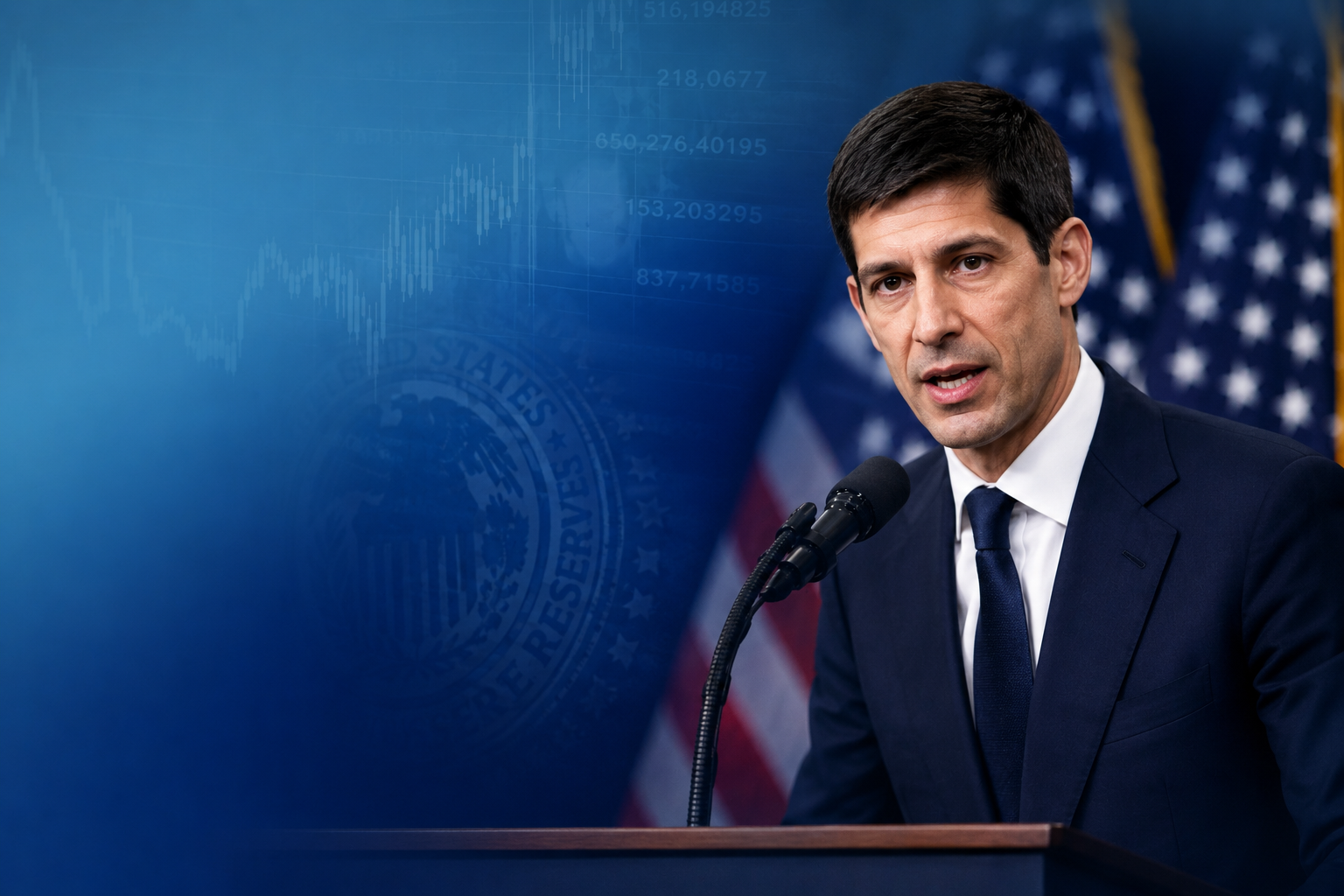
The Fed Interest Rate Outlook is back in focus today, October 7, 2026, as traders await the Federal Reserve’s minutes from its September policy meeting. The release could provide valuable clues about why policymakers raised interest rates last month and whether further tightening remains under consideration.
The minutes are scheduled for 2:00 p.m. ET (18:00 GMT) and cover the Federal Open Market Committee’s September 15–16 meeting. They arrive just weeks before the Fed’s next policy decision on October 28.
Why Are Today’s Fed Minutes Important?
At its September meeting, the Federal Reserve unanimously raised the federal-funds target range by 25 basis points to 3.75%–4.00%.
The decision marked the Fed’s first-rate increase since 2023.
Policymakers said economic activity continued to expand at a solid pace, while domestic spending and business investment remained resilient. However, inflation was still elevated and above the Fed’s 2% objective.
Today’s minutes could reveal details that the official policy statement did not.
Traders will be looking for signs of how strongly policymakers supported additional tightening, what risks they discussed, and whether officials believed September’s increase would be enough to restrain inflation.
Fed Interest Rate Outlook: What Did Kevin Warsh Signal?
Federal Reserve Chairman Kevin Warsh attracted attention following the September decision when he described the rate increase as removing a “dose of accommodation.”
That language suggested the September move may have represented only part of the tightening policymakers believe is necessary.
Warsh also indicated that broad financial conditions were difficult to describe as restrictive.
This makes today’s minutes particularly important.
If policymakers broadly agreed that financial conditions remain too accommodative, markets could interpret the discussion as evidence that additional rate increases remain possible.
The minutes may also provide more information about which financial conditions officials monitor when judging whether monetary policy is restrictive enough.
Inflation Remains Above the Fed’s 2% Target
Inflation remains central to the Fed Interest Rate Outlook.
The August Personal Consumption Expenditures report showed annual headline PCE inflation at 3.4%, while core PCE inflation stood at 3.0%.
Both remain well above the Federal Reserve’s 2% target.
However, there is an important timing distinction.
The August PCE report was released after the September Fed meeting, meaning policymakers did not have those updated figures when holding the discussions described in today’s minutes.
The data nevertheless provide useful context for traders assessing the Fed’s next move.
Inflation remains elevated, but economic information released since the meeting has complicated the argument for another immediate rate increase.
Markets Have Reduced Expectations for Another Rate Hike
Despite September’s increase, traders have recently become less convinced that the Fed will raise rates again at its October meeting.
Market pricing ahead of today’s minutes indicated roughly a 20%–22% probability of another 25-basis-point increase at the October 27–28 meeting, down sharply from around 50% a week earlier.
Recent economic data have contributed to that shift.
The September U.S. employment report showed payroll growth of only 29,000 jobs, raising concerns about slowing labor-market momentum.
Softer inflation signals and less hawkish comments from some Federal Reserve officials have also encouraged expectations that policymakers may proceed cautiously.
This creates an important challenge when interpreting today’s minutes.
The document reflects policymakers’ thinking in mid-September, while financial markets are responding to economic information available in early October.
A hawkish discussion could therefore influence markets without necessarily guaranteeing another rate increase.
Real Interest Rates Could Influence the Fed Debate
Real interest rates may also provide an important clue about policymakers’ thinking.
With the effective federal-funds rate around 3.9% and headline PCE inflation at 3.4%, the inflation-adjusted policy rate is approximately 0.5 percentage points.
Using core PCE inflation produces a real rate closer to 0.9 percentage points.
For policymakers worried about persistent inflation, relatively low real rates could support the argument that monetary policy is still not restrictive enough.
Today’s minutes may show whether that concern was widely shared across the Committee or concentrated among its more hawkish members.
Markets Turn Cautious Ahead of the FOMC Minutes
Financial markets were cautious ahead of Wednesday’s release.
The U.S. dollar strengthened, while investors assessed recent Federal Reserve commentary and prepared for possible clues about the future direction of monetary policy.
Treasury yields and oil prices also remained important influences on broader market sentiment.
Gold came under pressure, trading around $4,137 per ounce earlier Wednesday, while the U.S. Dollar Index moved toward 102.09.
Wall Street was also watching the Fed closely after the S&P 500 and Nasdaq reached record closing highs during Tuesday’s session.
The combination of elevated asset prices, persistent inflation and changing rate expectations makes the Fed’s assessment of financial conditions especially important.
How Could the Minutes Affect the U.S. Dollar?
The dollar could be one of the markets most sensitive to today’s release.
If the minutes show broad support for further tightening, expectations for future rate increases could strengthen.
A more hawkish interpretation could support U.S. Treasury yields and the dollar, while potentially creating pressure on gold and interest-rate-sensitive equities.
The opposite scenario is also possible.
If the minutes reveal significant concern about growth, employment or the risks of overtightening, traders could further reduce expectations for another near-term rate increase.
That could pressure the dollar and Treasury yields while potentially supporting gold and equities.
The reaction will therefore depend less on September’s rate increase—which markets already know about—and more on what policymakers said about the path ahead.
What Should Traders Watch in Today’s Fed Minutes?
Several areas deserve particular attention.
Future rate increases: Traders should watch for indications of how many officials believed additional tightening would be necessary.
Inflation risks: Strong concern about persistent inflation could reinforce a hawkish interpretation.
Financial conditions: Any suggestion that markets remain too accommodative could strengthen the case for higher rates.
Labor-market risks: Concern about weakening employment could support a more cautious approach.
Differences among policymakers: September’s vote was unanimous, but the minutes could reveal disagreements about what should happen next.
The balance between these factors could determine how markets reassess the Fed’s policy path.
Fed Interest Rate Outlook: What Comes Next?
Today’s release arrives at an important moment for U.S. monetary policy.
The Federal Reserve raised rates in September as inflation remained above target and policymakers sought to remove some monetary accommodation.
Since that meeting, however, weaker employment data and changing inflation expectations have reduced market confidence in another immediate increase.
That makes today’s minutes particularly valuable.
A strongly hawkish discussion could challenge current market expectations and revive speculation about another rate hike.
A more cautious or divided debate could reinforce expectations that the Fed will wait for additional economic evidence before acting again.
For traders, today’s release is therefore about more than reviewing September’s decision.
It could provide an important window into the Fed Interest Rate Outlook and help markets judge whether September’s increase was the beginning of further tightening—or the start of another pause.