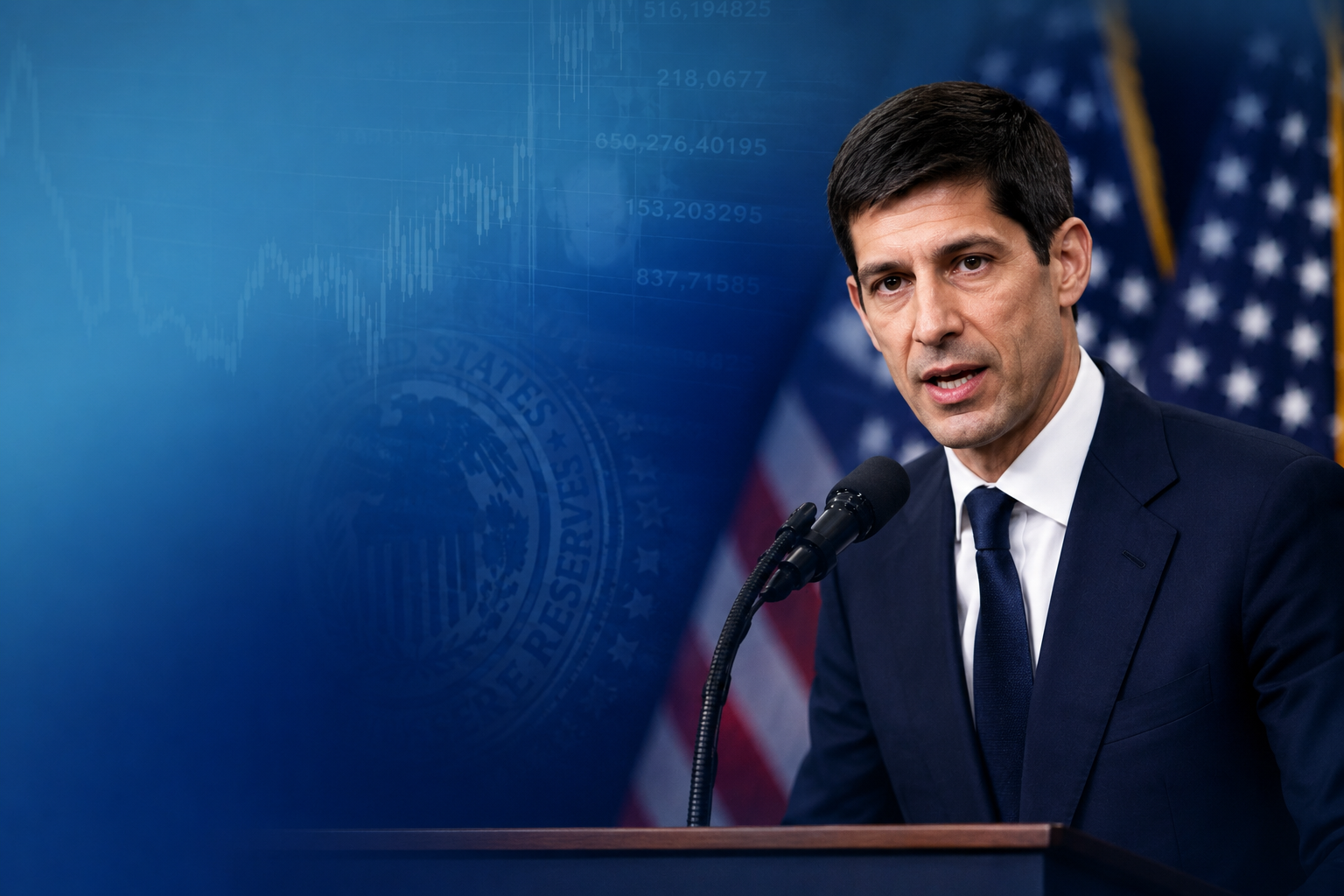

November 18, 2026 | Federal Reserve News
The Fed Minutes, released on Wednesday, November 18, revealed growing concerns about persistent inflation among Federal Reserve policymakers. The document reinforced expectations of further interest-rate increases, supporting the US dollar while adding pressure to gold and financial markets.
The Federal Reserve published the minutes of its October 27–28 meeting at 19:00 GMT, equivalent to 14:00 Eastern Time. Policymakers had maintained interest rates at 3.75%–4.00%, although disagreements emerged over whether additional tightening should begin immediately.
Following the release, the dollar remained near a 19-month high, while gold extended its decline. US stocks also experienced volatility as investors assessed the implications for December’s monetary policy decision.
Fed Minutes Reveal Strong Support for Further Rate Hikes
The October meeting minutes showed that almost all Federal Reserve participants expected additional interest-rate increases under their baseline economic outlooks. Policymakers remained concerned that inflation could stay elevated longer than previously anticipated.
Although the committee maintained interest rates at 3.75%–4.00%, the decision passed by a 10–2 vote. Governor Lisa Cook and Cleveland Fed President Beth Hammack preferred an immediate 25-basis-point increase.
Several participants also expressed concerns about delaying further tightening. They warned that persistent inflation could eventually require more aggressive monetary policy measures.
Importantly, two policymakers suggested that an increase exceeding 25 basis points might deserve consideration in December. Such action would depend on whether incoming inflation data proved unfavorable.
These discussions reinforced the Federal Reserve’s commitment to returning inflation toward its 2% target.
US Dollar Strengthens Following the Fed Minutes
The US dollar remained strong following Wednesday’s hawkish Federal Reserve minutes, extending its broader upward trend. The Dollar Index (DXY) advanced approximately 0.3% to 103.81, approaching its highest level since April 2025.
The greenback had already gained support from stronger economic data and expectations of further monetary tightening. The latest minutes reinforced those expectations by revealing widespread support for additional interest-rate increases.
Higher US interest rates generally increase the attractiveness of dollar-denominated assets. Consequently, investors have continued favoring the dollar over several major currencies.
However, the dollar’s reported daily advance also reflected developments preceding the minutes. The available market figures do not establish the exact percentage change occurring immediately after publication.
EUR/USD and GBP/USD Decline as Dollar Demand Persists
The euro weakened against the dollar, with EUR/USD declining approximately 0.2% to 1.0972 during Wednesday’s session. The pair remained under pressure from differences between US and European monetary policy expectations.
Meanwhile, GBP/USD fell approximately 0.5% to 1.3148, reflecting sustained dollar strength and developments in British inflation expectations.
USD/JPY remained near 159.37, with the Japanese yen showing relatively limited movement. Traders continued balancing expectations of Federal Reserve tightening against potential monetary policy changes in Japan.
These movements highlighted the dollar’s broad strength during the session, although not every change occurred directly after the minutes.
Gold Prices Extend Losses as Fed Minutes Reinforce Tightening Expectations
Gold experienced significant selling pressure on Wednesday as investors responded to expectations of higher US interest rates. Spot gold declined approximately 3.2% to $3,726.19 per ounce in late-session reporting.
Earlier, the precious metal touched approximately $3,719.55, its lowest level since September 2025. US gold futures also settled 3.2% lower at $3,741.90.
The stronger dollar reduced gold’s attractiveness for international buyers, while elevated interest rates increased its opportunity cost. Gold does not generate interest income, making Treasury securities relatively more attractive when yields remain high.
The hawkish minutes reinforced these pressures by signaling that further monetary tightening remained likely. However, gold had already been declining before the announcement, reflecting broader market concerns.
The continued weakness demonstrated how interest-rate expectations can outweigh traditional safe-haven demand.
Treasury Yields and US Stocks React to the FOMC Minutes
US financial markets ended Wednesday with mixed performances as investors assessed the Federal Reserve’s latest policy signals. The S&P 500 reversed earlier gains and finished lower following the release.
The index declined 0.23% to 7,323.63, marking its fifth consecutive losing session. Meanwhile, the Dow Jones Industrial Average fell 1.11% to 50,198.17.
The Nasdaq Composite performed comparatively better, advancing 0.42% to 24,429.88. Technology stocks experienced mixed movements as investors also evaluated corporate earnings and artificial intelligence developments.
Treasury yields remained elevated but declined during the session, despite the hawkish tone of the minutes. The benchmark 10-year yield stood near 5.07%, down approximately 3.7 basis points.
This divergence suggested that bond investors were responding to several factors beyond the Federal Reserve’s policy outlook. Concerns about economic growth and financial-market stability also influenced sentiment.
Therefore, Wednesday’s market reaction was not uniformly hawkish across all asset classes.
Fed Minutes Highlight AI Debt and Financial Stability Risks
Beyond inflation, the Fed Minutes revealed growing concerns about financial risks associated with artificial intelligence investment. Policymakers discussed the rapid expansion of borrowing used to finance AI infrastructure.
Several officials highlighted complex financing arrangements and increasing debt exposure among technology-related companies. They warned that disappointing investment returns could trigger significant asset-price adjustments.
The Federal Reserve also identified elevated equity valuations and hedge fund leverage as important financial vulnerabilities. Such conditions could amplify market volatility during periods of economic stress.
However, policymakers acknowledged that strong banking and household balance sheets provided some protection against severe financial disruptions.
These discussions introduced another consideration for equity investors, particularly those exposed to AI-related companies and highly leveraged businesses.
December Fed Rate Hike Expectations Remain Elevated
Following the release, market expectations continued favoring another Federal Reserve interest-rate increase in December.
The probability of a larger 50-basis-point increase remained around 5%, suggesting that markets still favored gradual tightening.
However, the minutes showed that some policymakers were willing to consider more aggressive action if inflation remained persistent. This raised questions about the potential pace of tightening during early 2027.
The Federal Reserve’s next monetary policy meeting is scheduled for December 8–9, 2026. Upcoming inflation, employment, and economic growth figures will remain important influences on that decision.
Outlook: What Do the Fed Minutes Mean for Traders?
The latest Fed Minutes reinforced the Federal Reserve’s determination to control inflation through additional monetary tightening. Policymakers’ discussions suggested that further rate increases remained likely, despite concerns about financial stability.
For Forex traders, the dollar’s continued strength reflected expectations of higher US interest rates. However, future gains may depend on whether economic data justify more aggressive tightening than markets already anticipate.
Gold remains vulnerable to elevated interest-rate expectations and sustained dollar demand. Meanwhile, stock markets could experience further volatility as investors reassess borrowing costs and financial stability risks.
The December Federal Reserve meeting will now become the next major focus for financial markets.
The central question is no longer simply whether the Fed will raise rates, but how aggressively it may tighten policy.