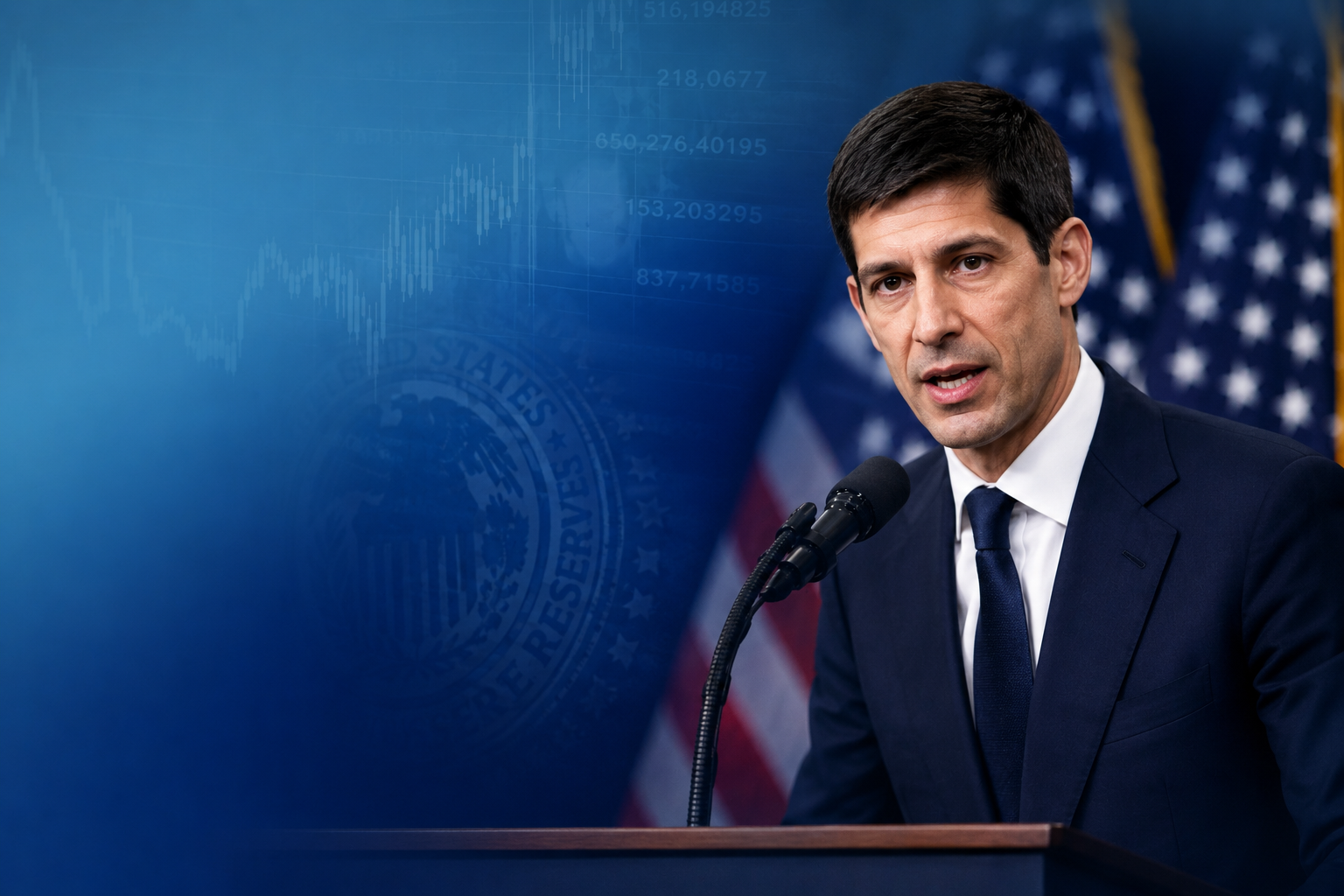

The latest US employment report showed Nonfarm Payrolls Fall by 23,000 jobs in July 2026, delivering a major downside surprise against market expectations for an increase of approximately 83,000. The contraction followed a downwardly revised loss of 20,000 jobs in June, signaling that the US labor market is losing momentum more rapidly than markets had anticipated. At the same time, the unemployment rate unexpectedly edged down to 4.1%, while the labor force participation rate declined to 61.4%, its lowest level in more than five years.
The unexpectedly weak employment figures immediately reshaped expectations surrounding the Federal Reserve, triggering sharp moves across Treasury yields, US stock futures, the dollar, and gold as traders reduced bets on another near-term interest-rate increase.
Nonfarm Payrolls Fall as Previous Months Face Sharp Revisions
The weakness in July was made more significant by substantial downward revisions to previous employment estimates.
June payrolls were revised down to a 20,000-job decline, while May’s employment gain was revised lower to 63,000. The revision to May alone removed 66,000 jobs from the previous estimate, while the latest figures brought average monthly employment growth over the past 12 months down to just 34,000 jobs.
The revisions suggest that the slowdown in hiring is not confined to a single disappointing month. Instead, employment growth has been considerably weaker in recent months than initially reported.
The July decline was led by local government education, which lost 50,000 jobs. Retail employment declined by another 19,000, while financial activities shed 14,000 positions.
Healthcare remained one of the few significant sources of employment growth, adding 22,000 jobs, although even that was below its 12-month average increase of 36,000.
Nonfarm Payrolls Fall as Wage Growth Slows
The payroll contraction was accompanied by another development likely to attract the Federal Reserve’s attention: weaker wage growth.
Average hourly earnings increased by just $0.02 during July, while annual wage growth slowed to 3.2%, below the anticipated 3.5% increase.
Slower wage growth can reduce concerns about labor-driven inflation because businesses face less pressure to pass rapidly rising compensation costs onto consumers. Combined with the outright decline in payrolls, the figures provide evidence that labor-market conditions are cooling considerably.
However, the decline in the unemployment rate to 4.1% complicates the picture.
Rather than reflecting stronger employment growth, the lower unemployment rate came alongside a fall in labor force participation to 61.4%. Fewer Americans participating in the workforce can mechanically reduce the unemployment rate even when job creation is weak.
Nonfarm Payrolls Fall and Send Treasury Yields Lower
Financial markets reacted rapidly to the employment shock, with the bond market recording one of the clearest moves.
US Treasury yields fell sharply after the release as traders reassessed the probability of additional Federal Reserve tightening. Lower yields reflected expectations that deteriorating employment conditions could make policymakers less willing to raise borrowing costs again.
The reaction is particularly important because the Federal Reserve is currently balancing two competing risks: inflation remains above its 2% target, but evidence of labor-market weakness is becoming increasingly difficult to ignore.
The Federal Open Market Committee voted 9-3 at its latest meeting to maintain the federal funds target range at 3.50%–3.75%, with three policymakers favoring an immediate 25-basis-point increase.
July’s jobs figures make the argument for another hike considerably more complicated.
Nonfarm Payrolls Fall as US Stock Futures Rally
US equity futures initially welcomed the weaker employment figures as investors focused on the possibility of a less aggressive Federal Reserve.
Dow Jones Industrial Average futures gained close to 200 points following the report, while broader equity futures also moved higher.
The reaction highlights the unusual relationship between economic data and financial markets under the current monetary-policy environment. Weak employment data can temporarily support equities when investors believe it reduces the probability of higher interest rates.
Lower Treasury yields can be particularly supportive for growth and technology stocks because they reduce the discount rate applied to future corporate earnings.
However, persistently weak employment would eventually present a different risk. If hiring continues deteriorating, investors could shift their attention from the potential benefit of lower interest rates toward concerns about consumer spending, economic growth, and corporate earnings.
Dollar, Gold, and Markets React to the Jobs Shock
The Nonfarm Payrolls Fall report was released by the US Bureau of Labor Statistics on Friday, August 7, 2026, at 12:30 p.m. GMT. The unexpectedly weak 23,000 decline in payrolls, compared with expectations for an increase of roughly 83,000, immediately triggered significant moves across currencies, bonds, equities, and precious metals.
The US dollar came under immediate selling pressure, with the US Dollar Index (DXY) falling to around 99.40, its lowest level in roughly seven weeks. The euro simultaneously climbed to around $1.1580, also reaching a seven-week high against the dollar. The currency reaction reflected a sharp reassessment of Federal Reserve policy: weaker employment growth and softer wage pressures reduced confidence that policymakers would proceed with another near-term interest-rate increase.
Gold received support from the same shift in rate expectations. The payroll disappointment drove Treasury yields lower and weakened the dollar—two developments that generally improve the environment for non-yielding bullion. With markets scaling back expectations for a September Fed hike, gold traders gained another reason to favor the precious metal, although its next major move will remain sensitive to upcoming US inflation figures and changes in Treasury yields.
The reaction in the bond and equity markets was equally pronounced. The benchmark 10-year US Treasury yield dropped to around 4.60% from approximately 4.67%, as investors moved into government bonds and reconsidered the path of Federal Reserve policy. US stock futures initially moved higher, with S&P 500 futures gaining around 0.5% and Dow futures advancing roughly 0.3%, as investors focused on the reduced probability of additional monetary tightening rather than the immediate economic implications of weaker hiring.
The initial market message was therefore clear: the employment shock was interpreted as dovish for Federal Reserve expectations, bearish for the dollar and Treasury yields, and initially supportive for gold and US equities.
What Comes Next for Markets?
The July employment report represents a significant warning sign for the US labor market.
The immediate market message was clear: Treasury yields dropped, stock futures advanced, and expectations for a September Federal Reserve rate hike declined sharply.
Attention now turns toward upcoming US inflation reports and Federal Reserve commentary. If inflation begins cooling alongside weaker employment growth, policymakers could have considerably less justification for additional tightening. On the other hand, persistently elevated inflation would leave the Fed facing an increasingly difficult choice between maintaining price stability and avoiding further deterioration in the labor market.
For traders, the fact that Nonfarm Payrolls Fall for a second consecutive month significantly raises the importance of upcoming economic releases. Any evidence confirming that the labor market is weakening could trigger further repricing across the US dollar, gold, Treasury yields, and major US stock indices, making monetary-policy expectations the dominant driver of financial markets in the weeks ahead.